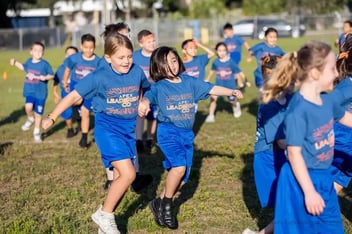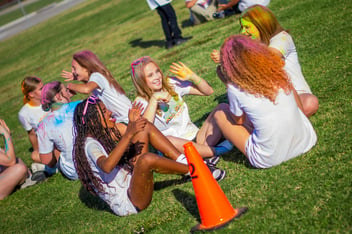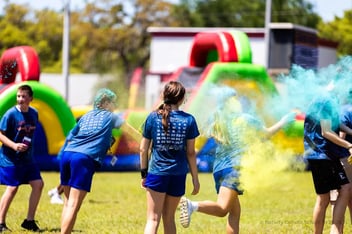


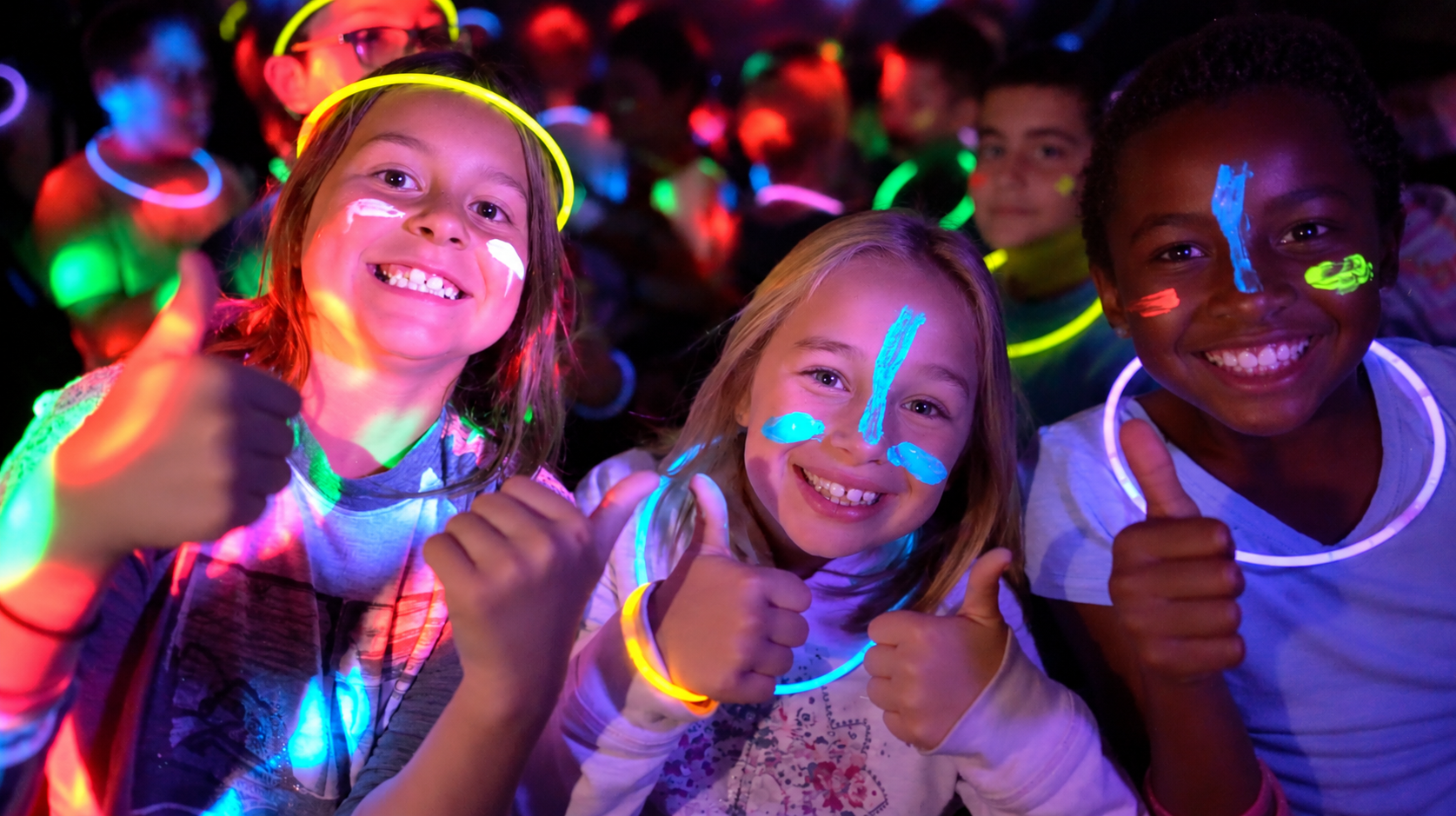
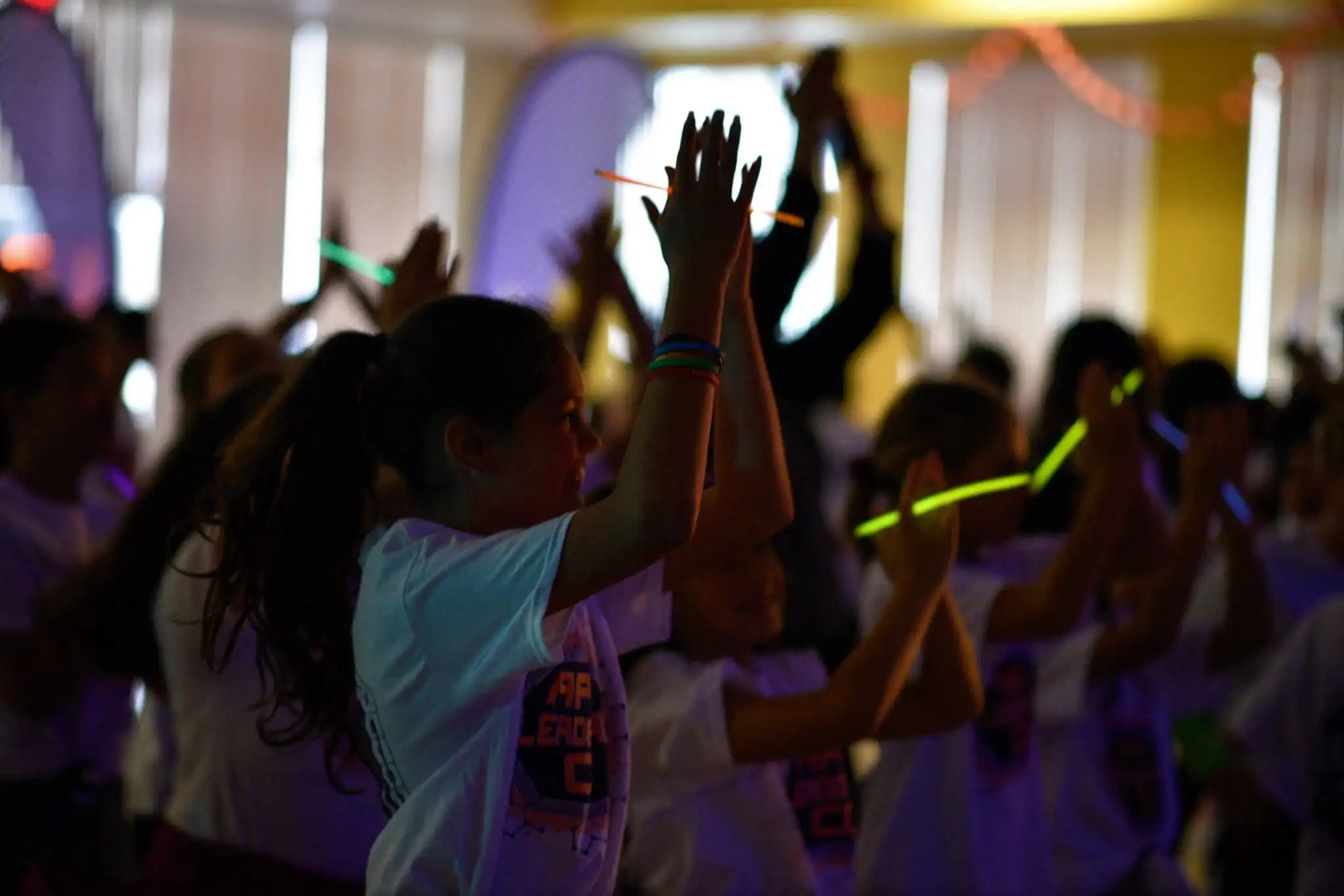
The lights go down, the blacklights flick on, and neon shirts light up across the gym. Glow bracelets swing in the air, and a room your students walk through every day suddenly feels like a concert. Glow events have a way of making a familiar school feel brand new!
They're also one of the most practical events a school can plan. Glow events happen indoors, so rain, cold, and early sunsets don't matter. If weather has ever wiped out one of your events, you already know how much that's worth. The 12 ideas below run from a full glow run to a simple flashlight reading party. The safety and inclusion checklist at the end draws on guidance from poison control centers, epilepsy organizations, the World Health Organization, and OSHA.
Planning a school glow event: the essentials
- Glow events are weatherproof by design. They happen in a gym or cafeteria, so winter and rainy-season dates are fair game.
- Glow sticks are generally non-toxic, but a leak can sting eyes and upset a stomach. Keep the Poison Help line handy: 1-800-222-1222 (CHOP Poison Control Center).
- Use steady lights, never strobes. Around 3% of people with epilepsy are photosensitive, and most develop it between ages 7 and 19 (Epilepsy Society).
- Turn the music down and add a quiet zone. WHO's standard for safe listening at events caps average sound at 100 dB and calls for quiet zones (WHO). For kids, aim well below that.
- Keep exits lit. OSHA's workplace exit-route rule, a useful benchmark for any darkened room, calls for lighted exit routes and exit signs visible at all times (OSHA 1910.37).
What is a glow event?
A glow event is a school activity held in a darkened room under blacklights, where neon clothing, glow sticks, and fluorescent paint light up. It can be as big as a schoolwide glow run fundraiser or as small as one classroom reading by flashlight. A glow party usually means a dance or game night, while a glow run is a pledge-based fun run moved indoors under blacklights.
Schools love glow events for four reasons:
- They're weatherproof. Indoor events can't be rained out. That makes them a favorite for winter and spring dates.
- They feel like an occasion. Turning the lights down transforms a room kids see every day.
- They get kids moving. Only 22.7% of US children ages 6 to 13 met the aerobic activity guideline in 2022-23, and that trend is getting worse (Healthy People 2030). A glow dance is exercise kids actually ask for.
- Everyone can join. Dancing, walking, or waving a glow stick all count, so every single kid has a way to take part.
12 glow event ideas for students
| # | Idea | Size | Crew needed | Works as a fundraiser? |
|---|---|---|---|---|
| 1 | Glow run | Schoolwide | Minimal (managed) or 8-15 (DIY) | Yes, pledges |
| 2 | Glow dance party | Schoolwide | Minimal (managed) or 8-15 (DIY) | Yes, pledges or tickets |
| 3 | Glow day at school | Schoolwide | 2-4 | Optional spirit passes |
| 4 | Glow family night | Families | 8-12 | Yes, entry donation |
| 5 | Glow games night | Families or grades | 6-10 | Yes, tickets |
| 6 | Glow bingo | Families | 4-6 | Yes, cards |
| 7 | Glow movie night | Families | 4-6 | Yes, entry donation |
| 8 | Glow kickoff assembly | Schoolwide | 2-3 | Launches a fundraiser |
| 9 | Flashlight reading party | Classroom | Teacher only | No |
| 10 | Glow bowling and ring toss | Classroom | Teacher plus 1-2 | No |
| 11 | Blacklight art show | Classroom or grade | 2-3 | Optional art sale |
| 12 | Neon spirit day | Schoolwide | 1 | Yes, $1 passes |
Schoolwide glow events
1. Glow run. Students collect pledges ahead of time, then run, skip, and dance laps around a glow-lit track in the gym. It's the fun run kids know, with neon, music, and a concert feel. If you'd love a big glow event without building it yourself, Apex's Glow Run brings professional sound, a live DJ, and blacklights. Our local team runs two weeks of daily leadership lessons, the online pledge platform, setup, event day, and teardown.
2. Glow dance party. No laps and no finish lines, just music, lights, and a dance floor. Grades rotate through the gym in short sessions. Apex Remix is a 30-minute glow dance party with a live DJ, blacklights, and professional sound, wrapped in the same two-week program. Running a DIY version? Plan a playlist with clean edits, a freeze-dance break every few songs, and a few staff "dance captains" to pull shy kids in.
3. Glow day at school. Glow day is a regular school day with glow-themed activities in every classroom. Think math facts on neon sticky notes under a blacklight, flashlight reading corners, and a glowing science demo. Students wear neon, and the day ends with a short glow dance in the gym. It's a great reward for hitting a schoolwide reading or behavior goal.
Family glow nights
4. Glow family night. Turn the cafeteria and gym into a glow carnival with game stations, a dance corner, and a photo booth. Charge a small entry donation per family. Ask a local business to sponsor the glow bracelets so every child gets one at the door.
5. Glow games night. Set up glow-in-the-dark games by grade: glow ring toss, glow bowling, glow-stick limbo, and "find the glowing star" scavenger hunts. Kids rotate through stations with a punch card, and families buy tickets for extra rounds.
6. Glow bingo. Classic family bingo with the lights down, neon markers, and blacklight-reactive cards. Your regular bingo crew already knows the drill, so a tired tradition gets new energy with almost no extra work.
7. Glow movie night. Kids bring glow sticks and blankets for a movie in the gym. Check your movie licensing before you advertise the title.
8. Glow kickoff assembly. Launch your spring fundraiser or reading challenge with a two-minute "lights out" reveal at the assembly. It's an easy way to make a big announcement feel like an event.
Classroom-sized glow ideas
9. Flashlight reading party. Lights off, flashlights on, and every student builds a reading fort. It costs almost nothing and makes reading feel like a treat.
10. Glow bowling and ring toss. Drop a glow stick into ten empty water bottles for bowling pins, or toss glow bracelets onto bottle necks. Both work in a classroom with the desks pushed back.
11. Blacklight art show. Students paint with fluorescent paint or highlighters, then the class tours the gallery under a blacklight. Families can view it at pickup, and you can offer prints as an optional fundraiser.
12. Neon spirit day. Students wear their brightest neon clothes, and kids who want to join buy a $1 spirit pass. One volunteer can run it.
The glow event safety and inclusion checklist
Most glow party guides are written for birthday parties at home. A school event brings hundreds of kids, a darkened public building, and students with a wide range of needs. If you're already planning a glow night, these checks take about an hour with your nurse and facilities lead.
Glow sticks and light-up gear
Glow sticks hold a mix of dyes, hydrogen peroxide, and a solvent called dibutyl phthalate. The Children's Hospital of Philadelphia Poison Control Center says the ingredients "are generally non-toxic, and most cases will not require medical attention" (CHOP). A swallowed sip can cause an upset stomach and mouth irritation, and fluid in the eyes should be flushed with water for at least 15 minutes. Glow sticks top the list of Halloween-related calls to poison centers (National Capital Poison Center), so plan for a few chewed bracelets.
Light-up toys deserve more caution. Many flashing accessories contain small disc batteries, which "can cause life-threatening injuries if swallowed" (Upstate New York Poison Center).
- Hand out bracelets and necklaces with sealed connectors, and remind kids that glow sticks stay closed.
- For K-2, skip any light-up toy with a coin or button battery.
- Post the Poison Help number (1-800-222-1222) at the first aid table.
Lights and photosensitivity
Around 1 in 100 people has epilepsy, and about 3% of them have photosensitive epilepsy, according to the UK's Epilepsy Society. Flashing between 3 and 30 times per second is the common trigger range, and most people who develop it are between 7 and 19 years old (Epilepsy Society). That range overlaps most of your students.
- Use steady blacklights and turn off strobe and fast-flash effects on any DJ lighting.
- Ask your school nurse which students have seizure plans before you finalize the lighting.
- Mount blacklight fixtures high and aim them away from eye level, and follow the manufacturer's instructions.
For Apex glow events, we plan for light sensitivity with your staff before event day. Blacklights stay steady with no strobing, and any student who needs a modified experience gets one worked out in advance. No kid is left out of the celebration.
Sound and sensory needs
Loud, dark rooms can overwhelm some kids. About 1 in 31 eight-year-olds has been identified with autism (CDC, 2025), and unusual reactions to sound and light are a common sign (CDC). Plenty of other students are sensitive to noise too.
The World Health Organization's standard for safe listening at venues and events limits average sound to 100 dB and calls for quiet zones and available hearing protection (WHO). That's an adult festival standard. WHO's listening guidance sets a lower weekly limit for children than for adults (75 dB versus 80 dB over 40 hours a week). So a school event should sit comfortably below the festival cap (WHO-ITU).
- Keep the volume at a level where adults can talk without shouting.
- Set up a quiet corner with the lights up, a few chairs, and a staff member.
- Keep a basket of kid-size earmuffs at the door.
- Share a "what to expect" note with families ahead of time (the lights, the music, the quiet corner).
Darkness and exits
A darkened gym still has to be a safe place to leave in a hurry. OSHA's exit-route rule for workplaces is a good benchmark. It calls for each exit route to be adequately lighted and exit doors to stay free of decorations that hide them. The line of sight to an exit sign must be clearly visible at all times (OSHA 29 CFR 1910.37).
- Never cover or tape over exit signs, and keep decorations off exit doors.
- Keep a clear, lit walkway to every exit.
- Station an adult by each exit and plan a "lights up" signal for emergencies.
- Check with your district facilities team or local fire marshal about rules for darkened assembly spaces.
DIY glow event or fully managed: how they compare
| DIY glow event | Fully managed glow event | |
|---|---|---|
| Blacklights, sound, DJ | You rent or borrow | Provided |
| Volunteer crew | 8-15 for a schoolwide event | Almost none |
| Fundraising | Ticket sales or a separate pledge drive | Online pledges built in |
| Safety planning | Your team owns it | Planned with your staff |
| Extras | Up to you | Daily leadership lessons, daily rewards, family communication |
A DIY glow night is a wonderful community event when you have the crew. When your campus wants a glow event that raises real money without draining your volunteers, Apex runs Glow Run and Remix as two-week programs. Families pledge online, so there's nothing to sell, and pricing is quote-based with costs coming out of the funds raised. Planning your spring calendar? Our spring fundraiser ideas show where a glow event fits, and our new PTA and PTO fundraiser ideas cover more fresh formats. For the full list, see our school fundraiser ideas.
Your glow event questions, answered
What do you do at a school glow party?
Students dance, play glow games like ring toss and glow bowling, and wear neon or glow bracelets under blacklights. Bigger events add a DJ, a photo booth, or a glow run track.
What do you need for a glow dance at school?
Blacklights, a sound system, a clean playlist, glow bracelets, and a darkened gym with lit exit routes. Add a quiet corner with the lights up and adults stationed at every exit.
Are glow sticks safe for kids?
The ingredients are generally non-toxic, according to the CHOP Poison Control Center, but leaked fluid can irritate eyes and upset a stomach. Remind kids not to bite them, and call Poison Help at 1-800-222-1222 with any questions.
Are glow events safe for students with epilepsy?
They can be, with planning. Use steady blacklights and no strobe or fast-flash effects, since flashing between 3 and 30 times per second is the common trigger range. Check with your school nurse about students with seizure plans.
How do you turn a glow event into a fundraiser?
Collect online pledges before a glow run or glow dance, charge an entry donation for a family glow night, or sell $1 passes for a neon spirit day. Online pledges let family and friends give from anywhere.
What ages are glow events good for?
Every age from kindergarten through eighth grade. Younger kids love glow games and flashlight reading, and older students love a glow dance or glow run with a DJ.
Turn the lights down and watch the room light up
Glow events give kids a reason to move, a new way to see their own school, and a story to tell at dinner. Pick the size that fits your crew, run through the safety checklist, and enjoy the moment the lights go down.
If you'd love a schoolwide glow event your volunteers can simply enjoy, we're ready to help. Tell us about your school and we'll send a quote for a Glow Run or Remix.
Sources
- Children's Hospital of Philadelphia Poison Control Center, Glow Sticks.
- National Capital Poison Center, Halloween Tricks, Treats, and Glow Sticks.
- Upstate New York Poison Center, Halloween news release, October 21, 2025.
- Epilepsy Society (UK), Photosensitive epilepsy.
- CDC, Prevalence and Early Identification of Autism Spectrum Disorder, MMWR 74(2), April 17, 2025.
- CDC, Signs and Symptoms of Autism Spectrum Disorder.
- World Health Organization, WHO hearing guidelines implemented at major arts festival, October 8, 2024.
- WHO-ITU, Global Standard for Safe Listening Devices and Systems, 2019.
- OSHA, 29 CFR 1910.37, Maintenance, safeguards, and operational features for exit routes.
- Healthy People 2030, PA-09: Increase the proportion of children who do enough aerobic physical activity.