.png)


.svg)
.webp?width=4032&height=3024&name=DJI_20251031102655_0155_D%20(1).webp)

You've seen the photos from other schools. Kids scrambling over inflatable walls, classmates cheering, a whole gym buzzing with happy energy. And you've probably had two thoughts at once. This looks amazing. And how would we ever pull it off with the volunteers we have?
That second thought is fair, and we see how hard you already work. This guide answers it step by step. We'll cover how an obstacle course fundraiser works and what it really costs. Then we'll get into the safety facts most guides skip entirely. You'll also get a vendor-vetting checklist and a planning timeline to hand straight to your team.
How does an obstacle course fundraiser work?
An obstacle course fundraiser is a pledge-based school event: students collect online donations, then celebrate by tackling an obstacle course on event day. Pledging runs for two weeks. Event day happens in the gym or on the field.
The pledge model is the same engine that powers a fun run. Families share a student's pledge page with grandparents, neighbors, and coworkers. Supporters give a flat amount or pledge per obstacle completed. Event day turns all of that generosity into one big celebration.
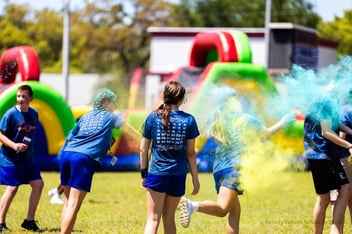
Event day itself runs in grade-band waves. A grade-band wave is a short scheduled slot when one group of grades runs the course together. Each wave lasts about 30 to 45 minutes, so lines stay short and nobody stands around waiting.

There's a bonus most fundraisers can't claim: this one builds growing bodies. A 2024 peer-reviewed school study found that obstacle-course and climbing activities produced significant gross-motor gains in 5 and 6 year olds. Running arm opposition improved by 44% and climbing grip by 32% (Children, Basel).
Those gains matter more than ever. Only 24% of children ages 6 to 17 get the recommended 60 minutes of daily physical activity (CDC Healthy Schools). An event that gets every kid moving is a win. If you're still weighing your options, our roundup of school fundraiser ideas covers the full menu.
Are inflatable obstacle courses safe? The honest numbers
Most fundraising guides never mention safety, even though it's the first question a careful principal asks. So we'll show you the actual data, both the concerning part and the reassuring part.
The injury numbers are real. The US Consumer Product Safety Commission estimated more than 18,000 bounce-house injuries treated in emergency rooms in 2018 (CPSC). The same agency counted 12 deaths between 2003 and 2013. A 2022 study estimated 159,569 US ER-treated inflatable-bouncer injuries from 2000 to 2019 (Journal of Pediatric Surgery). The most common were fractures (25.8%), strains (25.7%), and contusions (14.5%).
Now the context those headlines leave out. Roughly 96% of those injuries happened at private homes (CHOC), and 96.4% were minor enough for same-day discharge. The picture in the data is a backyard rental with no trained attendant, no anchoring plan, and no wind rule.
The evidence points to a clear answer: better supervision and real standards. Nobody needs to skip the event. The CPSC's guidance is specific. Inflatables must be staked and anchored on flat ground, and adults must supervise. Units come down when winds exceed the manufacturer's limit, typically 15 to 25 mph (CPSC).
There's also a formal standard behind all of this. ASTM F2374 is the recognized safety standard for commercial inflatables, covering design, manufacture, operation, and maintenance. Several states write it directly into law (Virginia Administrative Code). A vendor who knows F2374 by name is a vendor who takes your students seriously.
How to vet an inflatable vendor: a 6-point checklist
A ten-minute phone call separates professional operators from the folding-table crowd. Ask every vendor these seven questions, and put the answers in writing before you sign anything.
- ASTM F2374 compliance. Ask whether their equipment and operations meet the ASTM F2374 standard.
- A certificate of insurance is the vendor's proof of liability coverage, issued by their insurer. Ask for one that lists your school or district as an additional insured for event day.
- Trained attendants. Who staffs each inflatable, and what training have they had?
- A written anchoring plan. Stakes for grass, water or sandbag ballast for gym floors and blacktop, on flat ground every time.
- A written wind policy. The unit comes down when sustained winds pass the manufacturer's limit, typically 15 to 25 mph per CPSC guidance.
- Capacity limits by age and size. How many students per unit, and who enforces it during a busy wave?
If reading that list made your shoulders tense, that's a reasonable reaction for a volunteer team. A managed program like the Apex Obstacle Course is built for this part of the job. Our local, background-checked coaches bring vendor-grade equipment and handle setup, anchoring, capacity limits and event-day supervision. Your team still clears the calendar, gets the principal's sign-off, and sends the news home to families.
What does an obstacle course fundraiser cost?
The rental quote is the easy number. The real cost is everything your school is still holding after the truck pulls away. Think supervision, insurance and permits, the promotion that goes home, and a way to collect the money. Three options sit in front of most K-8 teams, and they split that work very differently.
Three options, side by side
| Option | What you pay up front | Who runs event day | Who carries insurance and permits | What your volunteers still do |
|---|---|---|---|---|
| DIY stations | Materials only: cones, tunnels, ropes, tape, plus whatever your donation platform charges | Your volunteers, at every station, in every wave | Your school or district, including facility permits and participation waivers | Roughly two people per station per wave, plus setup, teardown, check-in, first aid and platform admin |
| Inflatable rental | About $200 to $500 for a basic course, $1,000 to $2,500 for large multi-piece, plus $50 to $150 delivery | Depends entirely on the contract. Delivery-only rentals leave supervision to you | Vendor's COI covers its own equipment and staff. District approval, waivers and any city permit stay with your school | Attendants at each unit if the vendor sends none, plus capacity enforcement, line management, check-in and platform admin |
| Managed program | No upfront cost to the school. Costs come out of the funds raised, and pricing is quote-based | The provider's own staff, on campus, for the whole event | Provider carries coverage for its equipment and operations. District approval and facility access stay with your school | Dates and calendar, principal sign-off, family communications, space and access, and deciding what the money funds |
An inflatable rental
The rental charge buys equipment for a few hours. Everything around it stays with your school.
Typical market rates for a basic inflatable obstacle course run about $200 to $500 per 4 to 6 hour rental (Thumbtack). Mid-size courses run $500 to $1,000. Large multi-piece setups run $1,000 to $2,500, plus $50 to $150 for delivery. Prices vary by region and season.
Remember that the delivery-only rentals drop the unit, anchor it, and drive off, so supervision lands on your volunteers. Ask for the certificate of insurance naming your school or district as an additional insured.
Then check your own side of the paperwork. District approval, participation waivers, and any city permit for an amusement device all sit with the school. Those approvals can take weeks, so start them early.
The rental also doesn't collect a single dollar for you. You'll still choose the donation platform, set up the pledge pages, write the promotion that goes home, and staff the course all day. Budget the rental first, then budget the rest.
A managed program
A managed program puts the equipment, the staffing and the fundraising platform into one contract. Apex pricing is quote-based, and our costs come out of the funds raised. Your school pays nothing up front.
Ask for that number in writing in the contract before you sign, from us and from anyone else you're considering. If a provider won't put the cost on paper, keep asking until they do.
On an Apex Obstacle Course, we bring the pledge platform and online giving, the daily character lessons, the student kickoff, and coaches who staff event day. Your team picks the dates and clears the calendar, and gets the principal's sign-off. You also send the communications home, provide the space and access, and decide what the money funds.
Across 221 obstacle course events in Apex's own event records, the median event raised $48,080 with 613 participants taking part. That's a median of $80.57 per participant. Read those numbers carefully. They're gross totals raised before any costs come out, so they don't show what a school kept. And participants counts the students who took part, so it isn't an enrollment figure.
Your own number will land somewhere else. School size moves it, so does the length of your pledge window, and so does how widely families share those pledge pages. Take a written quote, run it against a realistic participation estimate for your campus, and you'll see your net profit before you commit. Our pricing page explains how a quote gets built, and the Apex Obstacle Course page covers what the two weeks include.
The same PTO Today survey found over half of parent groups raise under $15,000 a year. So weigh both sides of the tradeoff. A rental costs money your budget may not have. DIY costs hours your people may not have. A managed program covers its costs out of the funds raised and brings staffing you don't have to recruit. The right call is the one your team can sustain.
Your planning timeline and weather plan
Give yourself six to eight weeks and the whole project stays calm. A workable timeline looks like this:
- 8 weeks out: pick the date, book the field, and reserve the gym as your indoor backup. Choose a vetted vendor, a DIY plan, or a managed program.
- 4 to 6 weeks out: collect the certificate of insurance, the anchoring plan, and the written wind policy. Confirm district waiver requirements.
- 2 to 3 weeks out: launch online pledging and send home the kickoff flyer.
- 1 week out: lock the grade-band wave schedule and volunteer assignments.
- Event day: walk the course before the first wave, check the forecast, and enforce the wind rule without exception.
Take that wind rule seriously, because timing works against you. About 70% of inflatable injuries happen between May and October (CHOC). That's the exact window when schools book outdoor events and afternoon storms roll in. A written 15 to 25 mph limit plus a gym backup means weather can bend your day without breaking it.
Planning for autumn specifically? Our guide to fall fundraiser ideas maps the busiest season on the school calendar. And if your middle schoolers want something with a different flavor, a color run fundraiser runs on the same pledge engine.
Your questions, answered
How does an obstacle course fundraiser work?
Students collect pledges online before the event, then run a gym or field obstacle course on event day. The school keeps the donations, and nobody has to sell a single product. Most schools run pledging for two to three weeks and move students through the course in grade-band waves.
How much does it cost to rent an inflatable obstacle course?
Typical market rates run about $200 to $500 for a basic course per 4 to 6 hour rental (Thumbtack). Large multi-piece courses run $1,000 to $2,500. Add $50 to $150 for delivery and setup. Get quotes from at least three local vendors, since prices swing by region and season. Remember that the rental covers equipment only, so supervision, permits and the donation platform stay on your list.
What does a managed obstacle course program cost?
Managed programs price by quote, and Apex is one of them. Our costs come out of the funds raised, so your school pays nothing up front. Ask any provider to put the cost in writing in the contract before you sign. Ask what the price covers too: equipment, staffing, the pledge platform, and the lessons leading up to event day.
Are inflatable obstacle courses safe for elementary schools?
They can be, when they're operated to CPSC guidance and the ASTM F2374 standard. That means anchored on flat ground and supervised by trained adults. Capacity limits apply by age and size, and the unit comes down when winds pass the manufacturer's limit of roughly 15 to 25 mph. About 96% of recorded injuries happened at private homes (CHOC), which shows where inflatables mostly get used. The research reports no injury rate per participant by setting, so it can't tell you how risky a supervised school event is. Your protection comes from the operating procedures, the trained attendants, and the vendor your district approves.
What is ASTM F2374?
ASTM F2374 is the ASTM International standard covering the design, manufacture, operation, and maintenance of commercial inflatable amusement devices. Several states write it into law, including Virginia (Virginia Administrative Code). Asking a vendor about it is the fastest professionalism test available.
Do obstacle courses help child development?
Yes. A 2024 peer-reviewed school study found obstacle-course-based activities produced significant gains in running, hopping, and climbing skills in young children (Children, Basel). The event doubles as a genuine dose of physical education.
How do you set up a school obstacle course fundraiser?
Pick a date and venue with an indoor backup, then choose DIY stations or a vetted inflatable vendor. Launch online pledging two to three weeks out, recruit station volunteers, and run students through in grade-band waves. A managed program folds the equipment, the staffing and the pledge platform into one contract, and your team still picks the dates and sends the news home.
How long should an obstacle course event last?
Schedule 30 to 45 minutes per grade-band wave across a school day. Waves keep lines short, let younger students take easier variations, and keep the energy high from the first class to the last.
What insurance or waivers does an obstacle course fundraiser need?
You'll need the vendor's certificate of liability insurance naming the school. You'll also want confirmation of the district's own coverage, plus participation waivers per district policy. Ask your district office early, since waiver requirements vary and approvals can take a few weeks.
Ready for an event day your students will talk about all year?
You now know more about obstacle course fundraisers than most vendors will ever volunteer. You know how the pledge model works, what the safety data really says, and what a rental does and doesn't cover. You also know the seven questions that protect your students, plus the columns that decide between DIY stations, a rental, and a managed program. That's a real piece of work, and your school gets the benefit of it.
If you'd rather hand that checklist to a team that does this every week, we'd love to meet your campus. See how the Apex Obstacle Course works, or tell us about your school and we'll bring you a written quote with the cost spelled out in the contract. Local coaches, two weeks of leadership lessons, and an event day where every single kid conquers something. We're cheering you on!