.png)


.svg)

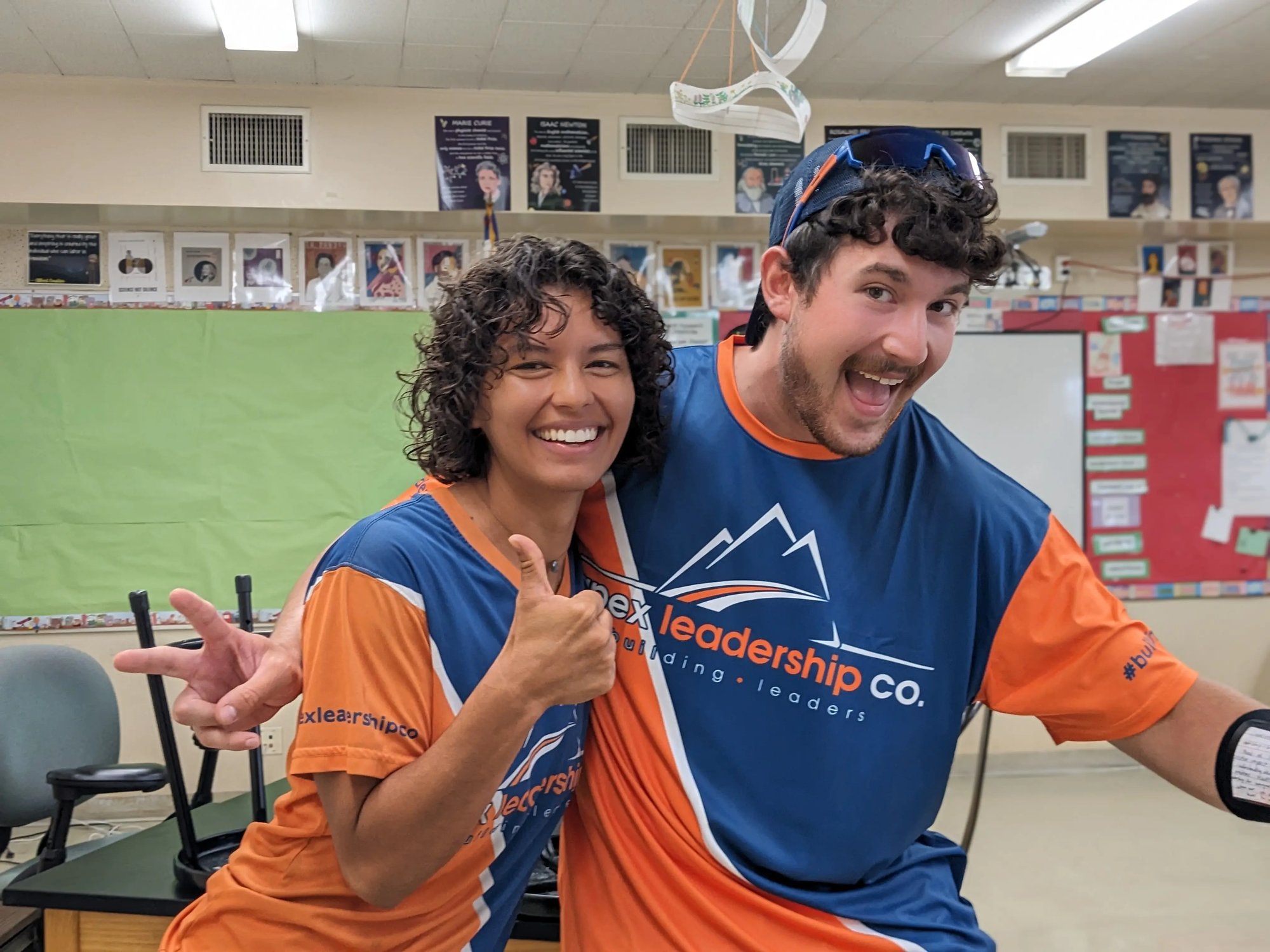
A fun run is a relaxed, social running event held for enjoyment and often for a cause. Community fun runs vary a lot from one to the next. Some set a distance like a 1K or a 5K, some post finish times, some hand out entry-fee proceeds to a charity, and some are simply a morning jog with a t-shirt at the end.
A school fun run is the K-8 version, and it follows one consistent pattern. Students run or walk laps on a short course during the school day, with no clock and no rankings, while pledges collected beforehand supply the money. Donors give either a flat amount or a set amount for every lap a student completes. Every single student who takes part counts as a winner.
A fun run in six lines
- The untimed, lap-based, pledge-funded version is the school pattern. Community fun runs are a looser category, and plenty of them are timed or set at a fixed distance.
- Pledges do the fundraising. Donors give a flat gift or a set amount per lap through a shareable online page.
- A managed program splits the work. The provider runs the pledge platform, the logistics, brings the equipment, and manages the event day. Your school still picks dates, sends the communications home, and decides what the money funds.
Fundraiser season sneaks up fast. One day you're labeling school supplies. The next, you're in a planning meeting where someone asks, "What about a fun run?" With everything already on your plate, nobody expects you to walk in knowing how the format works. Most PTO leaders learn it on the fly.
Below you'll find how the school version raises money, what a typical event brings in, how it compares to a 5K, and what event day really looks like. The tradeoffs are in here too. You deserve the full picture before anything lands on your calendar.
Community fun runs vary. School fun runs follow one pattern.
Type "fun run" into a search engine and you'll mostly find adult road races. Same phrase, very different event, and it trips up plenty of first-time PTO planners. The two share a name and not much else.
The school version is the one with rules you can count on: laps, no clock, no placings, pledges. Community fun runs are a broad category. Some are chip-timed, some charge $30 at the door, some run a measured 5K course through downtown. When you read a generic fun run article online, check which one it's describing.
| School fun run | Community fun run | Timed 5K or road race | |
|---|---|---|---|
| Distance | Lap-based on a short course, no fixed distance | Varies widely, often 1K to 5K | Fixed, measured course |
| Timing | Untimed every time | Sometimes timed, sometimes not | Chip-timed with posted results |
| Competition | None, every participant wins | Usually low key, though some post results | Placings and age-group awards |
| Who it's for | K-5 students during the school day | Adults, families, and community groups | Trained runners |
| How the money works | Pledges collected before event day | Often an entry fee, sometimes charity pledges | Entry fees fund the race itself |
A 5K is a fixed 3.1-mile course, usually run against a clock, built for people who signed up to race. A school fun run has no set distance and no clock at all. Kids run laps on a short loop, and the pledges supply the money.
So when your principal says "fun run," picture a recess-style celebration with a fundraising engine behind it.
The two-week arc of a school fun run
Most school fun runs run on a simple two-week arc. Week one opens with a pep rally that gets students fired up. Kids set up online pledge pages to share with family and friends. Pledges roll in through week two while the energy builds. Event day caps it off with music, cheering, and a track full of happy kids.
At Apex, we wrap a leadership program around that same arc. Our local, background-checked coaches visit classrooms daily for two weeks with short character lessons, and the 2026-27 theme is "Super Heroes." Then our team runs event day itself, from the music to the lap counting, on the Fun Run program your school picks off the calendar. If you're wondering about how our lessons are developed, check our Leadership Theme page.

How a school fun run raises money
A school fun run raises money through pledges collected before the event. Donors pick one of two options. A per-lap pledge pays a set amount for every lap the student completes. A flat donation is a single fixed gift with no math attached.
A quick illustration shows how per-lap pledges add up. Picture a second grader with five sponsors who each pledge $1 per lap. She runs 30 laps on event day, so her page collects 5 x $1 x 30, or $150. Her grandmother skips the math and gives a flat $25. Treat those numbers as an example only. Real totals swing widely by school size and pledge model.
Online pledging is the engine of the modern version. Each student gets a shareable pledge page. The ask travels by text and email to grandparents, aunts, and family friends in other states.
That reach matters enormously. On our own platform, more than 70% of donations come from outside the student's household. The fundraiser opens up to everyone who loves those kids, well beyond the same few school families.
Why schools love fun runs
The first reason is arithmetic. One well-run pledge event can carry a large share of a year's fundraising. Apex's own event records back that up: across our fun runs, the median event brought in $77.07 gross per participating student. That came from a single two-week push, with no inventory to sort in the gym and no order forms to chase. Families hear one fundraising ask for the whole year.
If you're weighing your options, our roundup of school fundraiser ideas compares the formats side by side.
The second reason is movement. The CDC recommends at least 60 minutes of moderate-to-vigorous physical activity every day for kids ages 6-17. Yet fewer than one quarter (24%) actually get it (CDC Healthy Schools). The most recent national survey paints an even leaner picture. Just 19.7% of kids ages 6-17 were active at least 60 minutes daily in 2023-24 (America's Health Rankings, NSCH).
A fundraiser built on laps chips away at that gap while it funds the budget. The CDC also reports that physically active students tend to have better grades, school attendance, memory, and classroom behavior (CDC Healthy Schools). Principals notice that combination. So do teachers.
The results schools celebrate are real and specific. Seth Woodard Elementary publicly shared that its fun run raised $10,906 toward an ADA-compliant playground. Cynthia Ann Parker Elementary in Houston celebrated funding a smart board for every classroom. Robert Frost Elementary funded a Gaga pit and a STEAM corner with a Lego wall. All three schools shared those results publicly themselves.
The parent-involvement squeeze
There's a less obvious reason fun runs fit 2026 so well. Parents have less capacity than they did a few years ago, and the federal data proves it. Between 2018-19 and 2022-23, parent involvement fell in every category NCES measures (NCES, NHES 2023).
Attendance at school events dropped from 79% to 74%. Participation in fundraising slid from 57% to 52%. Volunteering or serving on a committee fell from 43% to 36%. Attendance at PTA or PTO meetings dipped from 89% to 83%.
Families still love their schools. They just can't staff a month-long catalog sale or a ten-shift carnival anymore. The events that thrive now are easy to join, joyful to attend, and light on volunteer hours.
A fun run fits that brief. Parents pledge from their phones in two minutes and show up to cheer if they can. The planning load sits with a small team, and it stays small.
What event day actually looks like
Event day feels like the best recess of the year. Music plays, a coach on a microphone keeps the energy up, and classes take the track in waves. At an Apex Fun Run, students run up to 45 laps in about 30 minutes on a short loop. Teachers and parents cheer from the sidelines. Every lap gets counted, and every kid gets celebrated!
The run is only the most famous format. Schools pick the version that fits their space, weather, and student body:
- Glow Run. The same lap event moved indoors under blacklights and neon. It's completely weatherproof.
- Obstacle Course. Inflatable challenges that adjust for all abilities. See the obstacle course fundraiser breakdown.

Whatever the format, the two-week structure stays the same: daily excitement, online pledging, one big celebration. Each format is a new costume on the same reliable engine.
Who does what when the program is managed
A managed program takes the heaviest, most time-hungry pieces off your volunteers. It doesn't take every piece, and any provider who says otherwise is overselling. Knowing the split before you sign up keeps event week calm.
| Your Apex team handles | Your school still handles |
|---|---|
| The pledge platform and online giving | Picking the dates and clearing the calendar |
| The daily character lessons + prizes | Getting the principal's sign-off |
| The pep rally + excitement building for 2 weeks | Sending the communications home to families |
| Event day itself | Providing the space and access |
| The coaches on campus | Deciding what the money funds |
That right-hand column is real work. Most of it is decisions and messages home, and it lands on one or two people across two weeks. No one is building a shift schedule or storing boxes in the copy room. Ask every provider you talk to for their own version of these two columns, so nobody discovers a gap the week before.
An honest look at the tradeoffs
Fun runs aren't the right call for every school in every season, and pretending otherwise wouldn't help you. Four things deserve a clear-eyed look.
Not every kid loves running. For some students, a lap event sounds more like PE class than a party. Formats like Remix, the Obstacle Course, and Color Games exist for exactly this reason. Walking always counts at a fun run, too. If participation for every ability is your top concern, start with our guide to inclusive fundraiser design.
Weather is real. An outdoor lap event in a rainy week needs a backup plan. That could be a gym, a covered space, or an indoor format like the Glow Run. Ask any provider, including us, what happens if the forecast turns.
A DIY fun run is absolutely possible. The pledging tech, prize tracking, and event-day logistics land on your volunteers, though. A managed program absorbs most of that workload, and your team still owns the dates, the messages home, and the funding decision. Weigh your team's hours as carefully as the dollars.
Your questions, answered
What is a fun run?
A fun run is a relaxed, non-competitive running event held for enjoyment and often for a cause, and community versions vary in distance and timing. A school fun run is the K-8 version: students run or walk laps during the school day with no clock and no rankings, and pledges collected beforehand supply the money.
How does a fun run fundraiser make money?
Students gather flat donations or per-lap pledges before the event. Donors who pledge per lap pay based on the number of laps their student completes on event day. Online pledge pages carry the ask to relatives and friends far beyond the school building.
How far is a fun run?
School fun runs are lap-based, with no set distance. At Apex events, students run up to 45 laps in about 30 minutes on a short track. Community fun runs vary, and many of them land between 1K and 5K.
Is a fun run a race?
No. School fun runs are untimed and non-competitive, and every student wins by taking part. There are no placings, no speed medals, and no qualifying times. Some community fun runs do post finish times, so check the event listing before you assume.
What ages can do a school fun run?
All of K-8 can take part. Younger kids run as many laps as they can within a set time, while older kids chase lap goals. Middle schoolers often prefer formats built for their age, like Color Games.
Why do schools choose fun runs over product sales?
One event can replace multiple catalog sales, with no inventory to store and nothing for families to buy or return. It also adds physical activity to the school year. Only about 1 in 4 kids currently meets the CDC's 60-minute daily guideline.
What is the difference between a fun run and a 5K?
A 5K is a fixed 3.1-mile road race, usually timed and often competitive. A school fun run has no fixed distance and no timing, and it's built around participation and pledge fundraising.
Ready to see one up close?
You now know more about fun runs than most planning committees do on day one. You know the definition, the pledge math, what a typical event brings in before costs, the difference from a 5K, and the honest tradeoffs. That's everything you need to decide whether one belongs on your school's calendar this year.
If you'd like the fully managed version, we'd love to show you how it works at your campus. Our coaches handle the pledging, the prizes, the daily leadership lessons, and event day. Your team picks the dates, sends the notes home, and gets to spend the big day cheering. Talk with your local Apex team, and bring your calendar so we can find the weeks that work.
Whatever you choose, the homework you're doing right now is what keeps a campus from scrambling in October. We're cheering you on!


.webp?width=352&name=DJI_20251031102655_0155_D%20(1).webp)